



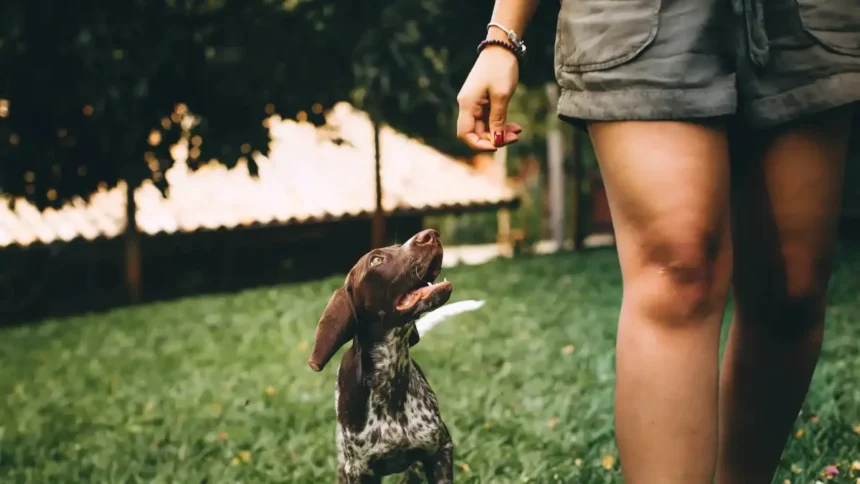
My dog “Poppy” follows me everywhere. Whether I go to the kitchen or the bedroom, she is right there. But the real mystery is why my dog follows to the bathroom and sits patiently (or impatiently) on the tile floor while I attend to personal business. I might find it endearing, annoying, or both. But before I decide whether this bathroom buddy behavior is sweet or something to address, you need to understand what’s driving it.
- The Pack Mentality Factor
- Love, Reinforcement, and Learned Behavior
- When It’s Love vs. When It’s Anxiety
- Three Practical Ways to Help Your Dog Be More Independent
- 1. Establish Calm Boundaries Within the Home
- 2. Gradually Increase Alone Time Through Desensitization
- 3. Provide Meaningful Enrichment and Exercise
- The Bottom Line
The term “Velcro dog” perfectly describes a canine companion who seems permanently attached to your side. But what looks like unconditional love might sometimes be a sign of something more complex: anxiety, learned behavior, or even just pack mentality. The good news? Understanding the difference matters, and there are practical steps you can take to help your dog feel more secure—whether that means embracing their attachment or gently encouraging independence.
The Pack Mentality Factor
Dogs are inherently social animals descended from wolves who lived in structured groups with specific hierarchies and relationships. In a pack, members stay close together for safety, coordination, and bonding. Your dog sees you as their pack leader and primary source of security. When you leave the room—even to use the bathroom—your dog’s instinct is to follow you because, from their evolutionary perspective, straying from the pack is risky.
This doesn’t necessarily mean something is wrong. It means your dog is behaving according to ancient instincts that have been hardwired into their DNA for thousands of years. Many dog owners notice this behavior most strongly in breeds specifically developed for close companionship, like Cavalier King Charles Spaniels, toy poodles, and Shih Tzus. These breeds were literally bred to be velcro dogs—to stay close to their humans.
Even so, bathroom surveillance isn’t a behavior every dog displays. Some dogs are content to nap on the couch while their owners attend to personal matters. The difference comes down to individual personality, breed tendencies, and something more important: what the dog has learned works to keep their owner nearby.
Love, Reinforcement, and Learned Behavior
If your dog has learned that following you to the bathroom results in praise, treats, cuddles, or even just your attention, they’re going to keep doing it. Dogs are highly intelligent creatures who quickly connect cause and effect. Follow owner → owner talks to me or pets me → positive experience → repeat behavior.
This is exactly how most velcro dog behaviors become established and strengthened over time. You might have inadvertently created the behavior by rewarding it. That’s not your fault—most dog owners naturally want to reciprocate the affection their dogs show them. When your dog looks up at you with those loving eyes, it feels good to reciprocate with attention and praise.
The challenge is that excessive reinforcement of “I must follow you everywhere” behaviors can accidentally increase your dog’s dependence on your presence. A dog who gets tons of attention whenever they’re near you might actually develop more anxiety during separation, not less. They begin to believe that being near you is necessary for their security and comfort.
The bathroom-following behavior, in particular, often stems from combination of factors: the dog knows they get your attention this way, they’re curious about what you’re doing (bathrooms have interesting smells and sounds), and they genuinely want to be close to their favorite person.
When It’s Love vs. When It’s Anxiety
This is the crucial distinction: normal velcro dog behavior and separation anxiety, while they might look similar on the surface, are fundamentally different emotional states.
**Normal velcro dogs** prefer to be near you. They like your company. They enjoy being in the same room and often follow you from space to space. However, these dogs remain calm when you leave. They might feel a little sad or bored, but they don’t panic. If you close the bathroom door, they may wait outside patiently or go find something else to do. They’re clingy, but they’re not distressed.
**Dogs with separation anxiety**, by contrast, actually panic when separated from you. This is a genuine emotional disorder characterized by fear, not just preference. The signs include:
– Excessive vocalization (barking, whining, howling) when you leave
– Destructive behavior like chewing furniture, scratching doors, or attempting escapes
– House soiling (urination or defecation) even in previously housetrained dogs
– Pacing in repetitive patterns
– Drooling, panting, trembling, or pacing while you prepare to leave
– Exhibiting anxious behaviors even before you leave the house
The key difference: Dogs with separation anxiety show distress behaviors specifically when you’re absent or preparing to leave. Velcro dogs just prefer you to stay. One is an anxiety disorder requiring potential professional intervention. The other is a personality trait or learned behavior that may or may not need addressing—depending on whether it bothers you.
Some velcro dogs can develop separation anxiety if the behavior isn’t managed, but not all of them will. Research suggests that dogs allowed to follow their owners from room to room, encouraged in excessive greeting behaviors, and overly bonded to their owners may be more prone to developing separation anxiety if you eventually need them to spend time alone. However, many velcro dogs maintain their closeness to you while remaining perfectly comfortable when you leave.

Three Practical Ways to Help Your Dog Be More Independent
If your dog’s bathroom-following behavior is becoming a problem—either because you want privacy, because they seem anxious, or because you’re concerned they might develop separation anxiety—there are evidence-based approaches that actually work.
1. Establish Calm Boundaries Within the Home
Dogs thrive when they understand clear expectations. This doesn’t mean being harsh; it means being consistent about where your dog can and cannot follow you.
Choose specific areas where your dog is invited to join you and areas where they remain outside. The bathroom is a logical boundary. When your dog approaches the bathroom door, use a calm, matter-of-fact command like “stay” or “wait” rather than getting excited, apologetic, or overly affectionate about closing the door.
The critical piece is consistency: everyone in your household needs to enforce the same boundary. If some people close the door and others leave it open, your dog becomes confused and the boundary breaks down.
To make this easier, create what trainers call a “yes space”—an area where your dog is welcome and encouraged to be. This might be a specific room, a dog bed near your usual sitting area, or a designated corner. Practice calling your dog to this space and rewarding them for settling there with treats or praise. Over time, they learn that their job is to stay in their yes space while you handle private business, and that being there is its own reward.
The underlying principle is positive reinforcement of independence rather than punishment for following. You’re rewarding the behavior you want (staying in their space) rather than punishing the behavior you don’t (following you).
2. Gradually Increase Alone Time Through Desensitization
If your dog struggles when separated from you—even momentarily—you can rebuild their confidence in being alone through a gradual, science-backed process called desensitization and counter-conditioning.
This involves deliberately practicing short separations in a way that convinces your dog that being apart is safe and even enjoyable.
Here’s how to implement it:
Start with very short absences—just 20 to 30 seconds. Leave your dog in one room (or outside the bathroom) and then immediately return before they have time to become anxious. Don’t make a big deal about leaving or returning. You’re aiming for boring, normal transitions.
When you return, have a treat or toy ready to associate separation with something positive. The goal is for your dog to learn: “Owner leaves for a bit → Owner returns with something good.”
Gradually increase the time away—perhaps by 30 seconds to a minute every few days, depending on how your dog responds. If at any point your dog shows anxiety (whining, scratching, pacing), you’ve increased the time too quickly. Back up and practice shorter durations.
This isn’t a fast process, and that’s actually the point. Moving slowly prevents your dog from becoming anxious during the training, which would reinforce the very thing you’re trying to prevent. However, research shows that systematic desensitization is highly effective, even when practiced by dog owners rather than professional trainers.
Pair these practice sessions with enrichment activities. Puzzle toys, frozen Kongs, snuffle mats, or treat-dispensing toys should appear specifically when you’re about to leave or when your dog is practicing alone time. Your dog begins to anticipate these rewarding activities instead of focusing on your departure.

3. Provide Meaningful Enrichment and Exercise
A bored dog is often a clingy dog. When dogs don’t have adequate physical exercise and mental stimulation, they turn to following their owners as entertainment and engagement.
This means your dog needs:
**Daily physical exercise** tailored to their age and breed. A young, high-energy dog might need 30-60 minutes of exercise daily, while a senior dog might need less intense but regular activity. A tired dog is generally a calmer, more independent dog.
**Mental stimulation** that engages their problem-solving skills and natural behaviors. This doesn’t require fancy equipment. Hide treats around your home and let your dog search for them, mimicking their natural foraging instinct. Play hide-and-seek with toys or yourself. Teach new commands or tricks. Rotate toys weekly so they feel novel and interesting.
**Structured activities before you leave.** Spending 10-15 minutes playing with your dog, practicing commands, or engaging in physical activity before you need to separate from them actually makes it easier for them to settle during alone time. Their energy has been channeled into something productive, and they’re naturally more relaxed afterward.
**Environmental enrichment** in the spaces where they spend alone time. This might include a window perch so they can watch the world, calming background music, or visual interest like artwork. Some dogs respond well to dog-specific media like “DogTV” which provides engaging content for canines.
The relationship between exercise, enrichment, and clinginess is direct: a mentally and physically satisfied dog has fewer emotional resources available for anxiety and separation distress. They’re simply too content and engaged to panic about being alone.
The Bottom Line
Your velcro dog’s bathroom habit is almost certainly rooted in love, curiosity, pack instinct, or learned behavior—not necessarily a sign of pathological separation anxiety. Most dogs who follow their owners everywhere are just expressing their preference for proximity and their attachment to you.
That said, understanding the difference between healthy closeness and anxiety-driven dependency matters. If your dog seems genuinely distressed when separated from you, if their following you has become compulsive, or if you’re concerned about creating unhealthy dependence, these three strategies offer evidence-based ways to help.
The goal isn’t to stop your dog from loving you or from seeking your company. It’s to build their confidence so they can be content whether you’re in the next room or across the house. A truly secure dog can be deeply bonded to their owner while remaining calm and self-assured during separation.
Start with one strategy—perhaps setting a clear boundary around the bathroom—and practice it consistently for a few weeks before adding another. Dogs learn best through patience, consistency, and positive reinforcement. Before long, you might find that your velcro dog is a little less sticky while remaining every bit as loving.